Moving Funds from China to Germany: Blocked Accounts, FX Limits & Remittance
Depositing your Sperrkonto from mainland China means navigating SAFE capital controls, a SWIFT bank wire, and a four-step funds roadmap — then unlocking the monthly payout once you arrive. Here is the full, caveated walkthrough.
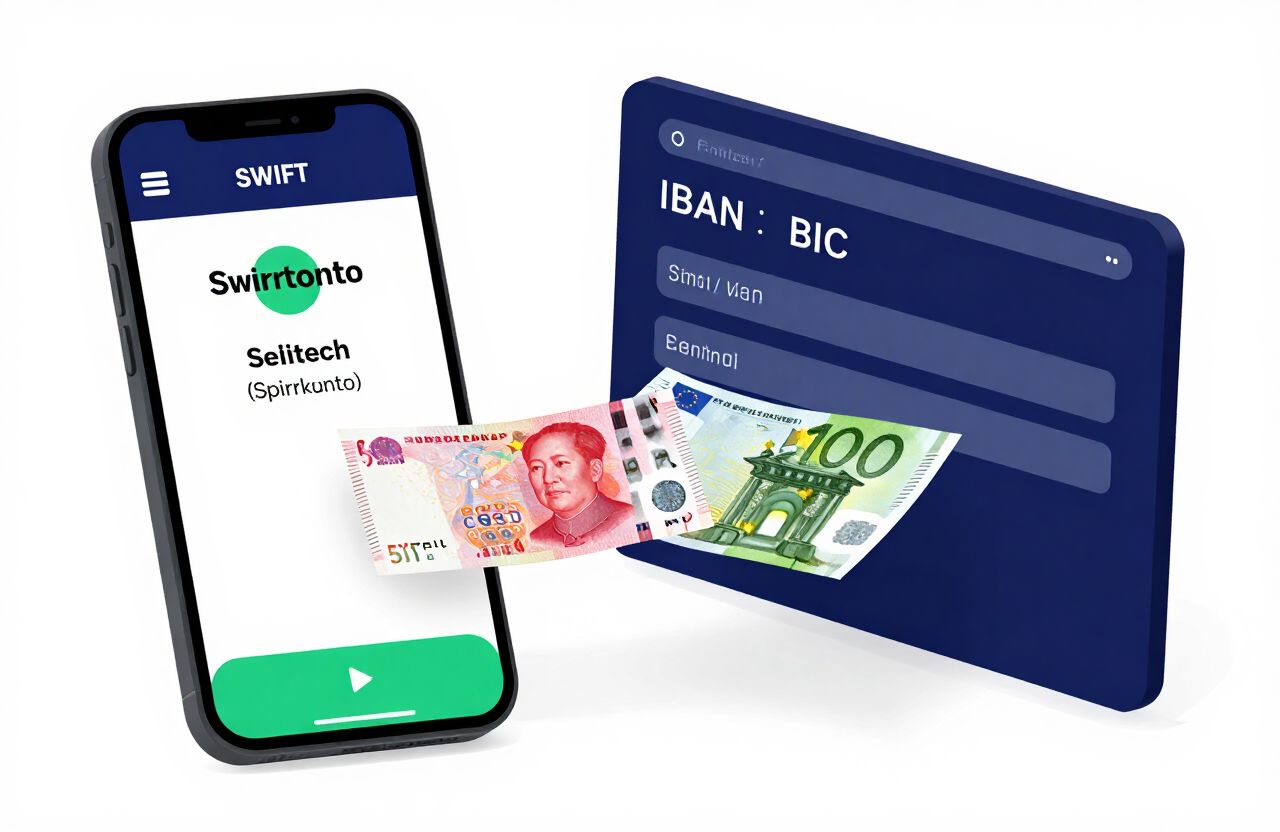
For most Chinese applicants, the financial half of a German student-visa file is harder than the paperwork half. You must deposit a fixed sum into a blocked account (Sperrkonto) before the embassy will consider you, and moving that money out of mainland China means working within the State Administration of Foreign Exchange (SAFE) rules, a SWIFT bank wire, and a multi-step funds roadmap. This guide walks through the capital controls, the realistic remittance methods, the four-step flow from RMB to a German euro account, and how to unlock your monthly payout after you arrive. Always confirm the current amount, provider acceptance and bank requirements for your specific case before you transfer.
Pro tip — the numbers that matter: For 2026 the standard German blocked-account requirement is €11,904 per year, released as a fixed €992 monthly payout. Confirm the current figure on your mission’s checklist before transferring, as the amount is reviewed annually. Digital providers commonly used by Chinese applicants include Fintiba, Expatrio and Coracle — but acceptance varies by German mission and application type, so verify your mission accepts your chosen provider before you open the account. None of these providers is universally “approved”; each mission decides what it accepts.
China’s $50,000 Annual FX Quota vs. German Visa Proof
Before you can wire euros to Germany, you must first convert RMB into EUR under China’s foreign-exchange controls. The key concept is the annual personal foreign-exchange facilitation quota: each Chinese resident may purchase and settle up to the equivalent of USD 50,000 in foreign currency per calendar year, processed at an authorised bank with valid identification. This quota covers the conversion of RMB into foreign currency — it is not an automatic entitlement to remit any amount abroad, and it cannot be lent to or borrowed from another person.
The SAFE facilitation quota
Within the annual USD 50,000 equivalent quota, you can purchase EUR at major Chinese state banks — Bank of China, ICBC, CCB and others — by presenting valid ID and declaring the purpose (e.g. study abroad). The quota is per person, per calendar year, and resets on 1 January. Conversions above the quota are possible but require supporting documents and pass the bank’s authenticity review; they are not guaranteed.
Documents banks review for large transfers
For transfers exceeding the facilitation quota, Chinese banks typically request supporting documents such as your German university admission letter and the Sperrkonto confirmation letter. These documents support the declared purpose, but they do not guarantee approval — the bank conducts its own authenticity review and may decline the transfer or request additional proof. Requirements vary by bank, branch and over time, so ask your branch for its current document list before you plan around a specific date.
A common misunderstanding is to treat the USD 50,000 quota as a guaranteed outward-remittance ceiling. In practice, conversion (buying EUR) and outward remittance (sending it abroad) are two steps, and the bank reviews the authenticity of both. SAFE maintains a unified national Watchlist: individuals caught lending or borrowing quotas, or structuring transfers to evade controls, can lose access to the facilitation quota for the current year and the next two. Plan honestly, document the real purpose, and never split a transfer across family members’ quotas to disguise its source.
Top Ways to Send Money to Your German Blocked Account
Only one method is a confirmed way to fund a blocked account: a SWIFT bank wire to the provider’s German IBAN. The other options below are useful for related expenses, but they are not substitutes for the wire unless your provider explicitly confirms otherwise in writing. Treat every alternative as unverified until both your bank and your blocked-account provider confirm it can reach the Sperrkonto IBAN.
Traditional Bank Wire (SWIFT / Telegraphic Transfer)
The standard route to fund a blocked account. You instruct Bank of China, ICBC, CCB or another authorised bank to wire EUR by SWIFT to the provider’s German IBAN, quoting the exact Sperrkonto reference number so the deposit is matched to your file. Timing and fees vary by bank, corridor and intermediary banks — typically several business days, never guaranteed. Keep the wire receipt; the provider will ask for it if the deposit is delayed.
Cross-Border FinTech & Payment Platforms
Some specialised cross-border services and e-wallets advertise faster transfers and transparent conversion rates. Whether a given platform can remit to a German blocked account from mainland China depends on its licences, the destination IBAN, and current Chinese FX rules — do not assume a consumer app can fund a Sperrkonto. Confirm directly with both the platform and your blocked-account provider before relying on it.
UnionPay & International Cards
UnionPay and international credit or debit cards are useful for initial landing expenses, tuition payments and emergencies before your German Girokonto is set up. They are not a method to fund a blocked account — the Sperrkonto requires a bank wire to its IBAN. Overseas card spending is governed by separate SAFE rules and does not consume the annual conversion quota.
Source of funds matters. Chinese banks and German providers both scrutinise where the money comes from. A deposit whose sender name does not match the account holder can be delayed or returned, and some providers require the funds to come from the applicant’s own account. Confirm the provider’s third-party policy and your bank’s source-of-funds requirements before you transfer.
From Chinese Yuan (RMB) to German Euro Account
The roadmap below follows the standard funds flow. The order is fixed — you cannot wire money to an account you have not opened, and you cannot request the blocking confirmation until the deposit has cleared. Work through each step in sequence and keep every receipt and reference number.
- 01
Open a digital blocked account and receive the IBAN & BIC
Apply with Fintiba, Expatrio, Coracle or another provider your German mission accepts. After identity verification — the slowest step, especially with a recently reissued passport — you receive a German IBAN, a BIC, and a reference number for your deposit. Have your passport, university admission letter and a clear proof of address ready before you start.
- 02
Convert RMB to EUR at your Chinese bank
Visit a branch or use your bank’s app to purchase EUR within your annual facilitation quota, declaring the study-abroad purpose. For amounts above the quota, present your supporting documents — admission letter and Sperrkonto confirmation — for the bank’s authenticity review. The bank decides whether to approve; the documents support but do not guarantee the conversion.
- 03
Execute the SWIFT transfer with the correct reference number
Instruct your bank to wire the EUR to the blocked-account IBAN, entering the exact reference number your provider issued so the deposit is matched to your file. SWIFT timing and fees vary by bank, corridor and intermediary banks, so allow several business days and keep the wire receipt in case of a delay.
- 04
Receive the blocking confirmation (Sperrbestätigung)
Once the funds land and clear, the provider issues the Sperrbestätigung — the blocking confirmation document you submit to the German embassy with your visa application. Download the original file; most missions require the provider’s official document, not a screenshot.
Post-Arrival Setup: Girokonto & City Registration (Anmeldung)
The blocked funds are not released until you arrive in Germany and complete two activation steps: open a local current account (Girokonto) and register your address (Anmeldung). Most providers require both before they start the monthly payout. Follow the steps below in order, and budget around the fixed monthly amount once payouts begin.
- Open a German current account (Girokonto) — N26, Commerzbank, Sparkasse and other providers all work. Some blocked-account providers also issue their own payout card, so check whether you need a separate account.
- Complete your Anmeldung (address registration) at the Bürgeramt. Most providers require proof of arrival and a registered German address before activating payouts.
- Submit your activation documents to the blocked-account provider — typically your passport, Anmeldung confirmation, and the German IBAN where payouts should land. Processing takes a few days.
- Once activated, the provider releases €992 per month to your Girokonto on a set date. The amount is fixed, so plan your rent and living costs around it.
- If you have not yet chosen a bank, compare the best English-speaking bank accounts for expats in Germany to keep fees low and onboarding fast.
Frequently Asked Questions
With your funds in motion, line up the paperwork and banking steps that follow. These guides cover the next hurdles most Chinese applicants face.
Reviewed by the Expat Germany Guide editorial team
This guide is informational and based on publicly published German mission guidance, the German Residence Act (Aufenthaltsgesetz), and the State Administration of Foreign Exchange (SAFE) rules for individuals. Blocked-account amounts, provider acceptance, FX quotas, bank document requirements, transfer timing and refund procedures all vary by mission, bank, provider and application type, and the responsible authorities make the final decision — always confirm the current requirements for your individual case with your German mission, your Chinese bank and your blocked-account provider before transferring. It is not formal legal or financial advice.