German Consulates in China: Hukou Rules & Hague Apostille Requirements
Germany runs five diplomatic missions in mainland China, each covering a fixed consular district. Here is how Hukou and residence decide where you file your visa, and how the 2023 Hague Apostille changed document authentication for Chinese public records.
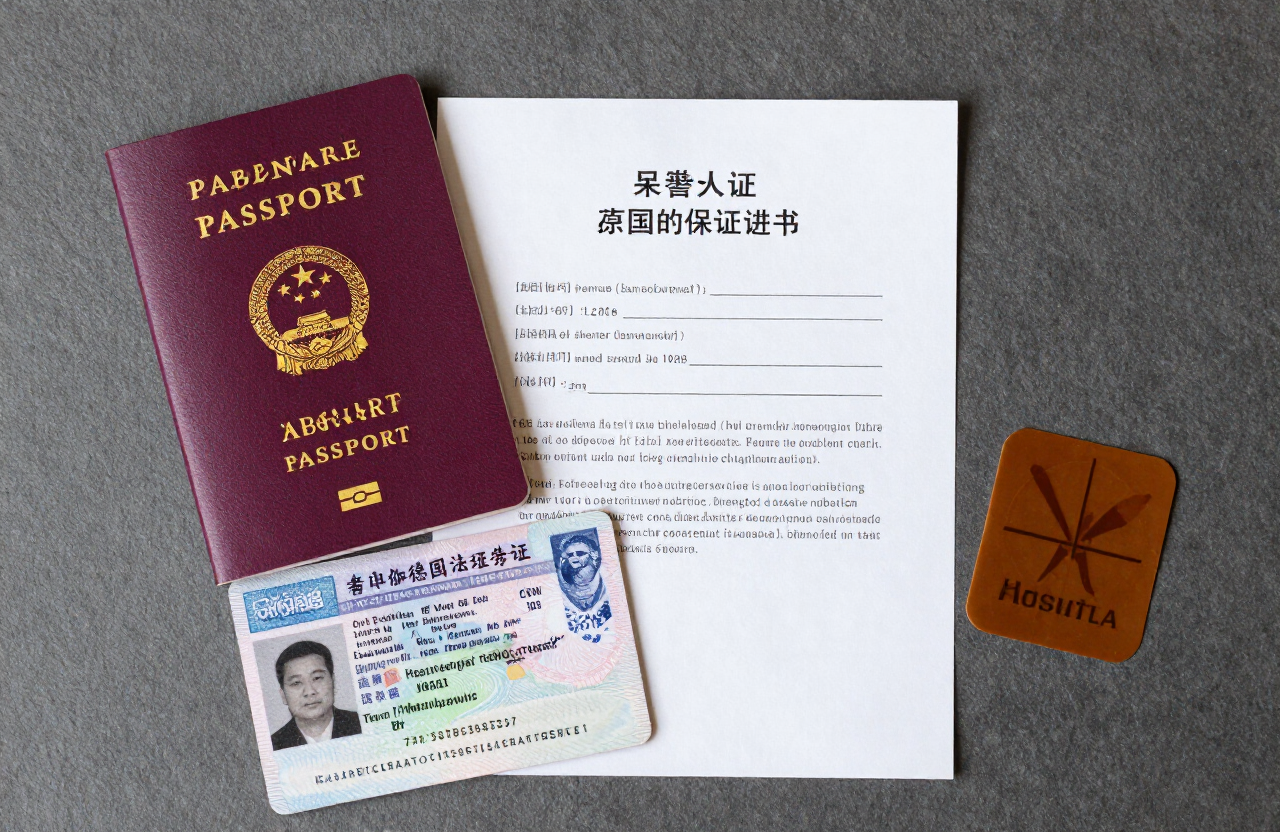
Germany maintains five diplomatic missions in mainland China — one Embassy in Beijing and four Consulates General in Shanghai, Guangzhou, Chengdu and Shenyang. Each covers a fixed consular district, and the mission responsible for you is determined by your habitual residence, which for many Chinese applicants aligns with their Hukou (户口). On top of that, China's accession to the Hague Apostille Convention on 7 November 2023 changed how Chinese public documents are authenticated for use in Germany. This guide maps the five districts, explains when residence rather than Hukou decides where you file, and walks through the new Apostille procedure — including the cases it does not cover. Always confirm the current rules with the specific mission handling your case before you book.
Major update: China joined the Hague Apostille Convention, in force since 7 November 2023. For Chinese public documents that fall within the Convention's scope, the traditional German Embassy legalization (Legalisierung) is replaced by an Apostille sticker issued by a Chinese Foreign Affairs Office (FAO). This simplifies authentication, but it does not replace every verification step — APS academic checks, translations and case-by-case requests still apply.
- Five German missions serve mainland China: the Embassy in Beijing and Consulates General in Shanghai, Guangzhou, Chengdu and Shenyang. Each has a fixed consular district defined by province, municipality and autonomous region.
- Jurisdiction is based on habitual residence (gewöhnlicher Aufenthalt), not strictly on Hukou. If you live, work or study outside your Hukou district with a valid residence permit (Ju Zhu Zheng / 居住证), you can usually apply at the mission covering your place of residence — confirm with that mission first.
- Since 7 November 2023, Chinese public documents within the Convention's scope need only an Apostille from a provincial Foreign Affairs Office (FAO) or the Ministry of Foreign Affairs, instead of German consular legalization.
- The Apostille does not replace the APS certificate for academic records, does not cover diplomatic or certain commercial documents, and German authorities may still request further verification in individual cases.
Finding Your Assigned German Diplomatic Mission
German missions assign visa applicants by habitual residence, not by nationality or by where a document was issued. For most Chinese citizens, habitual residence follows the Hukou, so the two often point to the same mission. They diverge when you have moved for work or study: a valid residence permit (Ju Zhu Zheng / 居住证) and proof of employment or enrolment in another district usually let you file there instead. The table below lists the official consular districts as published by the German Federal Foreign Office (Auswärtiges Amt).
| Mission | Consular district (provinces, municipalities, autonomous regions) |
|---|---|
| German Embassy Beijing | Beijing, Tianjin, Hebei, Henan, Hubei, Hunan, Jiangxi, Shandong, Shanxi, Shaanxi, Gansu, Qinghai, Inner Mongolia, Ningxia, Xinjiang and Tibet |
| Consulate General Shanghai | Shanghai, Jiangsu, Zhejiang and Anhui |
| Consulate General Guangzhou | Guangdong, Fujian, Hainan and the Guangxi Zhuang Autonomous Region |
| Consulate General Chengdu | Sichuan, Guizhou, Yunnan and Chongqing |
| Consulate General Shenyang | Liaoning, Jilin and Heilongjiang |
Note that Tibet is part of the Beijing Embassy district, not Chengdu — a common point of confusion. The Beijing Embassy also handles APS submissions for academic-verification applicants nationwide, regardless of where you live, because APS Beijing is run from the Embassy. APS processing jurisdiction and visa consular jurisdiction are therefore not always the same thing.
Applying outside your Hukou district: if your habitual residence is in a different mission's district, you can usually apply there by presenting a valid residence permit (Ju Zhu Zheng) plus proof of employment or study. Some visa categories or missions apply stricter rules, so confirm the accepted evidence with the specific mission before booking an appointment.
How to Authenticate Civil Documents (Birth, Marriage, Police Clearance)
Before 7 November 2023, using a Chinese civil document in Germany required notarization followed by legalization at the German Embassy or a Consulate — a multi-step chain. Under the Hague Apostille Convention, Chinese public documents within the Convention's scope now need only an Apostille issued by a Chinese Foreign Affairs Office (FAO). The standard route for a civil document such as a birth, marriage or police-clearance certificate is below.
- 01
Obtain a Notarial Certificate (Gong Zheng Shu) at a local Chinese notary
Take the original civil document to a notary public (Gong Zheng Chu) in the place where the document or event originates. The notary issues a Notarial Certificate (Gong Zheng Shu / 公证书) and attaches a German or English translation. For documents destined for the FAO, the notary seals the original notarial certificate in a closed envelope to be opened only by the FAO.
- 02
Submit the notarized certificate to the Foreign Affairs Office (FAO) for the Apostille
Take or send the sealed notarial certificate to the Ministry of Foreign Affairs or the competent provincial / regional FAO for the area where the document was issued. The FAO verifies the notary and affixes the Hague Apostille sticker and stamp. The FAO that is competent depends on where the document emanates, not on where you live.
- 03
Submit directly to the German mission or Ausländerbehörde
Once apostilled, the document no longer needs German Embassy legalization. Submit it directly with your visa application to the responsible German mission, or to the Ausländerbehörde in Germany for family-reunification and residence cases. Keep the apostilled original and a clear copy together.
Scope matters: the Apostille Convention covers public documents and notarial acts within its scope, but it does not apply to diplomatic or consular documents, and certain commercial or customs administrative documents are excluded. German authorities may still request a supplementary verification or a sworn translation in individual cases, so check the specific requirement for your document and visa category.
Academic records are a separate track. Chinese school and university certificates used for studying in Germany are verified through the APS procedure, not through an Apostille — the Apostille confirms a document's public status, while APS verifies academic authenticity. See our dedicated APS Beijing step-by-step guide for the routes, documents and fees.
- In force since 7 November 2023 — China acceded to the Convention on 8 March 2023; it entered into force for mainland China eight months later.
- Issued by Foreign Affairs Offices (FAOs) of provinces, autonomous regions and centrally administered municipalities, overseen by the Ministry of Foreign Affairs.
- A document notarized before 7 November 2023 can still be apostilled, provided the issuing notary is still licensed.
- Replaces German consular legalization for in-scope public documents — but not APS, not translations, and not every verification request.
Booking Visa Slots & Biometric Appointments
Visa appointments in China are booked through the German mission's online appointment system, and for some visa categories and locations through VFS Global visa application centers that handle submission and biometrics on the mission's behalf. The exact channel depends on your visa type and the mission, so check the appointment page of the mission covering your district first. APS applicants book separately through aps.org.cn, which also lists any dedicated APS visa windows at the missions.
What to prepare before you book
- Your passport, valid for the full intended stay, with enough blank pages.
- The apostilled and translated civil documents required for your visa category (birth, marriage, police clearance as applicable).
- For students: the APS certificate and your German university admission or conditional offer.
- For family reunification: proof of relationship, the sponsor's residence title and, where required, basic German-language evidence.
- Biometric data — fingerprints and a digital photograph — are captured at the appointment, so attend in person.
Processing times vary by mission, visa category and time of year, and no mission publishes a guaranteed turnaround. Demand is typically highest during the summer study-application cycle, so book as early as your documents allow and avoid assuming a fixed seasonal delay applies to every category. If your appointment is far off, keep your documents current — some missions impose a freshness limit on police-clearance and medical certificates.
Frequently Asked Questions
With your jurisdiction and document authentication mapped out, line up the academic and financial steps most Chinese applicants tackle next. These guides cover the two hurdles that follow.
Reviewed by the Expat Germany Guide editorial team
This guide is informational and based on publicly published German Federal Foreign Office (Auswärtiges Amt) mission guidance, the Hague Apostille Convention, and Chinese Ministry of Foreign Affairs / Foreign Affairs Office procedures. Consular districts, jurisdiction rules, appointment channels, Apostille procedures, translation requirements and processing times can change and vary by mission, document type and visa category, and the responsible authorities make the final decision — always confirm the current requirements for your individual case with the German mission, FAO and notary handling your documents before you apply. It is not formal legal advice.