Driving in Germany: Winter Tyre Laws & the 'O bis O' Rule Explained
Germany does not ban summer tyres by calendar date — it bans driving them in winter road conditions. Here is the situational Winterreifenpflicht under § 2 Abs. 3a StVO, the 3PMSF Alpine-symbol rule that replaced old M+S tyres, the current fines and points, and why "O bis O" is advice, not law.
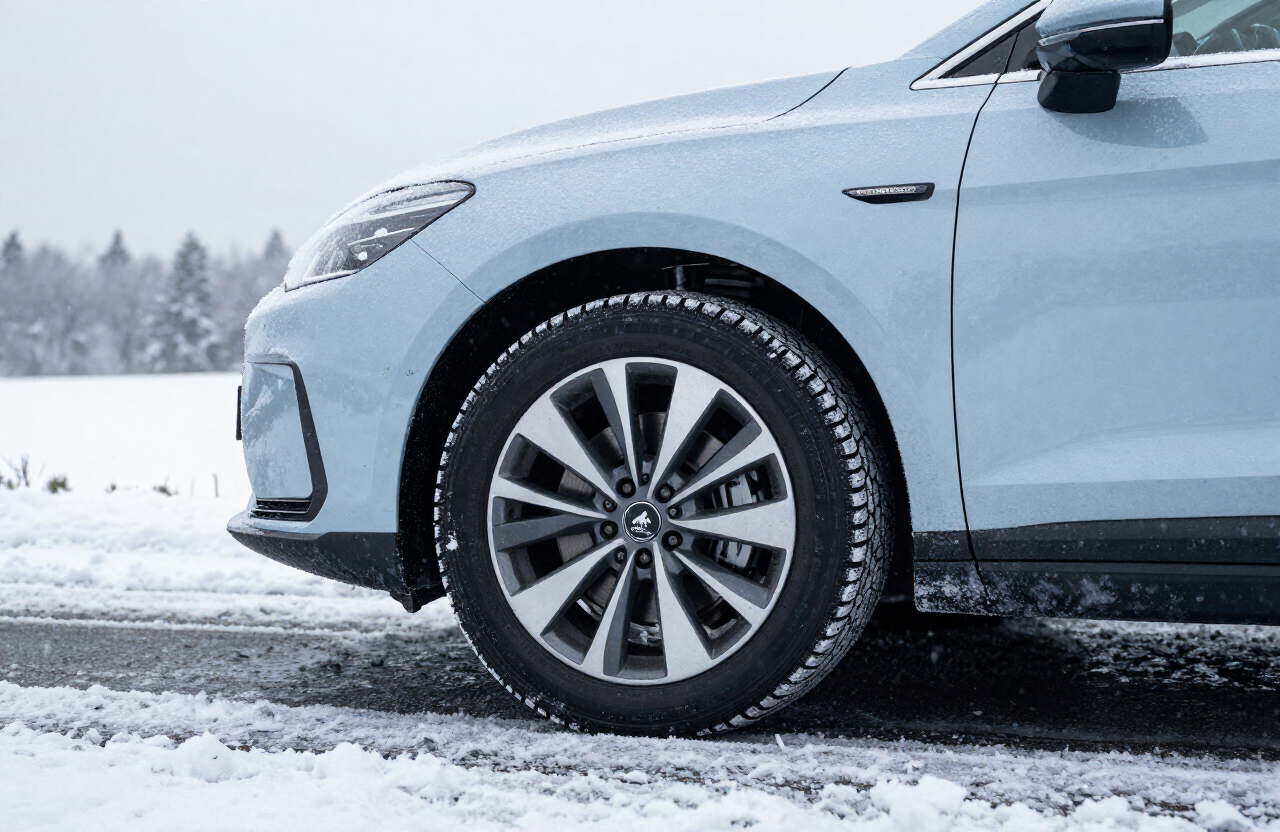
Driving in Germany comes with strict legal responsibilities — especially once the weather turns. If you own, lease or rent a car here, the rules around winter tyres are not a polite suggestion: they are a situational legal requirement backed by fines, points in the Flensburg driving register, and real insurance consequences. The catch is that Germany does not simply switch on a "winter tyre season" by date. Instead, the law is triggered by road conditions. This guide explains the situational Winterreifenpflicht under Section 2(3a) of the German Road Traffic Regulations (StVO), the 3PMSF Alpine-symbol standard that has now fully replaced old M+S tyres, the current fine and point amounts, and why the famous "O bis O" rule is a rule of thumb — not a statute. Always confirm the current rules for your vehicle and situation with the Federal Ministry of Transport (BMVI) or your local driver licensing authority before you drive in winter conditions.
- Germany has a situational winter tyre law, not a fixed date-based one. The duty to fit winter tyres is triggered by winter road conditions, not by the calendar.
- Only tyres bearing the 3PMSF Alpine symbol (three-peak mountain with a snowflake) now count as compliant winter tyres. Old M+S-only tyres lost their transitional status on 30 September 2024.
- Driving in winter conditions without compliant tyres carries a €60 fine and 1 point for the driver, rising to €80 if you endanger others and €100 if you cause an accident. The vehicle keeper can also be sanctioned.
- "O bis O" (October to Easter) is practical advice, not a legal requirement — but it is a sensible reminder, because winter conditions can arrive well before and linger after those dates.
What Is the 'O bis O' Rule?
In Germany, drivers often talk about "O bis O" — short for "Oktober bis Ostern", meaning October to Easter. The saying recommends mounting winter tyres from early October until Easter Sunday as a practical calendar guide, because German weather in early spring can be unpredictable and snow or frost can appear surprisingly late in the season.
"O bis O" is a rule of thumb, not a statutory law. There is no legal requirement to fit winter tyres simply because October has arrived, and no automatic permission to remove them at Easter. The actual legal trigger is winter road conditions — explained in the next section. Treat "O bis O" as a useful reminder to check your tyres early, not as the rule itself.
The reason the saying persists is that it works. Easter falls in March or April, and late snowfall is common across much of Germany, so fitting compliant tyres in October gives you a comfortable margin before the first frost and lets you remove them once stable spring weather arrives. Many garages and tyre hotels also see a rush in October, which is another practical reason to act early — but, again, the law itself does not name a month.
The Legal Requirement: Situational Winter Tyre Law
German law mandates situational winter tyre usage — the situative Winterreifenpflicht. Under Section 2(3a) of the Straßenverkehrs-Ordnung (StVO), you are legally prohibited from driving a motor vehicle in winter road conditions unless it is equipped with tyres that meet the statutory standard. Crucially, the duty attaches to the act of driving in those conditions: a car parked on summer tyres in November breaks no rule, but driving it onto an icy road does.
The law applies to all motor vehicles — including cars you rent. If you hire a car in winter, check that it is fitted with compliant tyres before you drive off, because the driver (you) is the one sanctioned for a breach, not only the rental company. Reputable German rental firms switch their fleets seasonally, but it remains your responsibility to confirm.
What Constitutes Winter Road Conditions?
The StVO lists the conditions that trigger the winter tyre duty. You must have compliant tyres fitted if you drive on roads covered with any of the following:
- Black ice (Glatteis) — a thin, near-invisible layer of ice on the road surface.
- Hard-packed snow (Schneeglätte) — snow compressed into a slippery, icy layer by traffic.
- Slush (Schneematsch) — melting snow mixed with water on the roadway.
- Frost or icy patches (Eis- und Reifglätte) — frost or ice forming on cold road surfaces, common on bridges and shaded stretches.
Notice what is missing from the list: there is no mention of temperature thresholds or calendar months. A cold but dry road in January does not, by itself, trigger the duty. The trigger is the actual presence of wintry precipitation or frost on the road you are driving on. This is why a fixed "winter tyre season" would be misleading — and why the situational wording matters so much.
What Types of Tyres Are Legally Approved?
Not every tyre marketed as a winter tyre satisfies the law. Since the 2017 amendment to the StVO, only tyres bearing the 3PMSF symbol — the three-peak mountain with a snowflake inside it, also called the Alpine symbol — are recognised as compliant winter tyres. The symbol certifies that the tyre passed a standardised snow-grip performance test.
3PMSF (Alpine Symbol) Tyres
Tyres bearing the three-peak mountain with a snowflake symbol are the only tyres that satisfy the statutory winter-tyre standard. This includes both dedicated winter tyres and all-season tyres that carry the symbol. If you drive in winter conditions, every axle of your vehicle must be fitted with 3PMSF tyres.
Old M+S-Only Tyres
Older tyres marked only "M+S" (Matsch und Schnee / Mud and Snow) without the Alpine symbol no longer meet the legal standard. A transitional period allowed M+S tyres manufactured up to 31 December 2017 to be used until 30 September 2024; since that date, only 3PMSF tyres count as winter tyres under the StVO.
Transition deadline passed: the grace period for old M+S tyres ended on 30 September 2024. If your tyres carry only the "M+S" marking and no 3PMSF Alpine symbol, they are now treated as summer tyres for the purposes of the situational winter tyre law — regardless of when they were manufactured. Check the sidewall before the first frost.
A practical note on all-season tyres: a modern all-season tyre with the 3PMSF symbol is fully legal for winter conditions and is a popular choice for expats who drive modest mileages in mild regions. In snow-heavy areas or for frequent alpine travel, dedicated winter tyres still offer better grip — but the law itself only asks for the Alpine symbol, not a specific tyre category.
Fines, Penalties, and Insurance Risks
Driving in winter road conditions without compliant tyres is an administrative offence (Ordnungswidrigkeit) under the German catalogue of fines (Bußgeldkatalog). The amounts below are the current statutory figures; the fine is imposed by the competent authority, not "automatically" — an officer must establish the breach.
| Situation | Fine for the driver | Points in Flensburg |
|---|---|---|
| Driving in winter conditions without compliant tyres | €60 | 1 point |
| … and thereby endangering other road users | €80 | 1 point |
| … and thereby causing an accident | €100 | 1 point |
| Vehicle keeper (Halter) putting the car into operation without compliant tyres | €75 | 1 point |
Two points are worth emphasising. First, both the driver and the vehicle keeper (Halter) can be sanctioned — so if you lend your car to a friend who then drives on summer tyres in snow, you as the registered keeper can also receive a fine. Second, the points are recorded in the Flensburg driving register; accumulating points can eventually lead to driving-licence measures, though a single winter-tyre offence will not.
Insurance is policy- and circumstance-dependent, not automatically voided. If you are involved in an accident while driving on summer tyres in winter conditions, your insurer may argue gross negligence (grobe Fahrlässigkeit) and reduce or refuse a payout under your comprehensive cover (Kaskoversicherung) — but this is decided case by case, on the policy terms and the facts, not by an automatic rule. Liability insurance still covers third-party damage, but the insurer can seek recourse against you. Never assume your cover is simply "voided"; check your policy and, if in doubt, fit compliant tyres before driving.
The practical takeaway is straightforward: the cost of a set of compliant 3PMSF tyres is far lower than the combined risk of a €60–€100 fine, a Flensburg point, and a reduced insurance payout after a winter accident. For most expats who drive in Germany, fitting winter or all-season 3PMSF tyres from October is the sensible default — which is exactly why the "O bis O" saying endures.
Frequently Asked Questions
Once your car is sorted, line up the everyday transit and admin basics that catch out new arrivals. These guides cover the next steps most expats tackle alongside getting mobile.
Reviewed by the Expat Germany Guide editorial team
This guide is informational and based on publicly published German road-traffic law, including Section 2(3a) of the Straßenverkehrs-Ordnung (StVO), the German catalogue of fines (Bußgeldkatalog), and Federal Ministry of Transport guidance. Fine amounts, point rules, tyre standards and the M+S transition deadline can change, and the responsible authorities make the final decision in any individual case — always confirm the current rules for your vehicle and situation with the BMVI, your local driver licensing authority, or your insurer before you drive in winter conditions. It is not formal legal advice.