The German APS Certificate Decoded: Step-by-Step for Chinese Applicants
The Akademische Prüfstelle (APS) certificate is the verification gate every Chinese-educated applicant passes before a German university — and a student visa — will consider them. Here is the route map, the documents, the 5-step process, and what the 2023 Hague Apostille change actually means for your file.
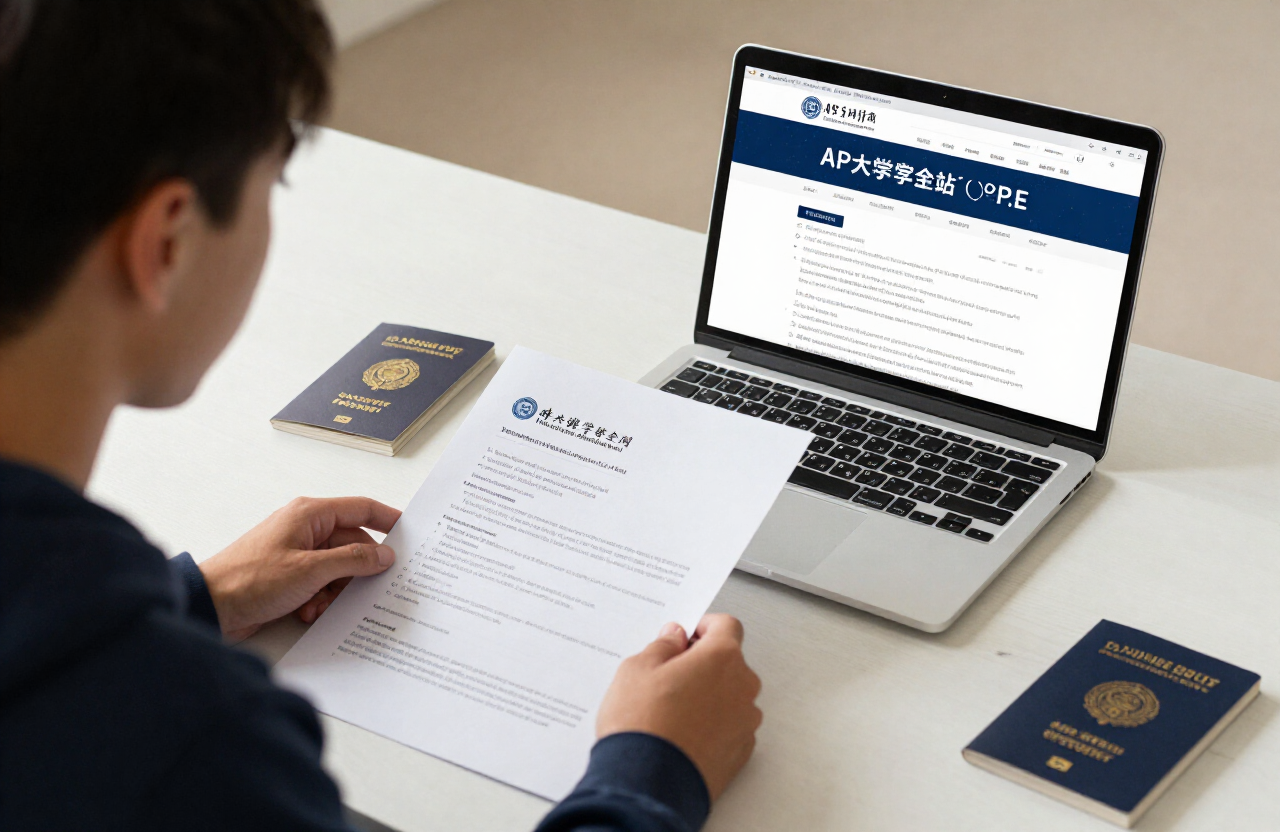
If you completed your schooling or university studies in mainland China and want to study at a German higher-education institution, the Akademische Prüfstelle (APS) certificate is the document that stands between you and your application. APS Beijing — the Akademische Prüfstelle run by the culture department of the German Embassy in Beijing together with the DAAD — verifies the authenticity of your Chinese academic records before a German university will even open your file. This guide decodes the procedures, the documents, the 5-step roadmap, and what China's 2023 accession to the Hague Apostille Convention really changes. Always confirm the current procedure for your specific case on aps.org.cn before you apply.
- The APS certificate is required for applicants educated in China before they can apply to a German university — and therefore before a student-visa application in that context. It is not a universal requirement for every German visa type.
- China acceded to the Hague Apostille Convention on 7 November 2023, so Chinese public documents used abroad now need only an Apostille instead of consular legalisation. APS still runs its own academic-verification procedure, so the Apostille does not replace the APS certificate.
- APS publishes no guaranteed processing time. Plan backwards from your university's application deadline and allow several weeks to a few months, especially if your route includes a TestAS date.
Understanding the APS Beijing Application Routes
APS does not run a single, uniform process. It lists several procedures for Germany, and the one you fall into decides whether you are interviewed at all, which documents you submit, and how long the review takes. Identify your route first, then work only from that procedure's document list on aps.org.cn. The three routes most Chinese applicants use are the China procedure, the Gaokao procedure, and the document-review procedure.
Interview / TestAS Route (China Procedure)
For applicants who have studied at a Chinese university and are applying for a Bachelor's or Master's in Germany. APS checks your documents for authenticity, then schedules a plausibility interview or the TestAS. Applicants who cannot sit a TestAS date may switch to the interview procedure.
Gaokao Procedure
For high-school graduates applying with a Gaokao result for a subject-related Bachelor's entry. APS states this route involves no plausibility interview and no TestAS. It requires at least 70% of the maximum Gaokao score — or at least 80% for medicine, pharmacy, veterinary medicine, dentistry and law.
Document Review Route
For scholarship holders, doctoral (PhD) candidates, and spouses of EU citizens, among others. APS verifies the documents only, with no interview and no TestAS. Confirm on aps.org.cn whether your status qualifies and which fee applies to your case.
Three further procedures exist for narrower situations — the partnership procedure for German-Chinese university cooperation programmes, the exchange procedure for short stays without a German degree, and the artists procedure for purely artistic or musical programmes at a German art or music academy. If your case is unusual, check the procedure descriptions on aps.org.cn before registering.
Mandatory Documents & Chinese Notary Requirements
Whichever route you take, APS verifies the authenticity of your academic records, so your documents must be notarized in the form APS expects. The core item is the Chinese Notarial Certificate (Gong Zheng Shu / 公证书) — a notarial act issued by a Chinese notary public, with a German or English translation attached by the notary. Use the exact document list for your procedure on aps.org.cn, but the checklist below covers what most Chinese applicants assemble.
- Chinese Notarial Certificate (Gong Zheng Shu) covering your academic credentials, with a German or English translation attached by the notary — not a self-translated copy.
- University transcripts and enrollment or exmatriculation certificates (Immatrikulations-/Exmatrikulationsbescheinigung), in sealed university envelopes where APS requires it.
- Gaokao score report and senior middle-school diploma (Huikao results and a grade-10-to-12 overview are also requested for graduates from 2019 onward).
- Proof of fee payment — the 2,500 RMB evaluation fee receipt for the China and Gaokao procedures (other procedures may differ; check aps.org.cn).
- Passport copy, APS registration confirmation, and a passport-style photograph as specified by your procedure.
Translation wording: APS expects the translation to be attached to the notarial certificate by the notary. Avoid describing a translation as "certified" unless your notary or APS confirms that exact status for your document. When in doubt, ask the notary to bind the German or English translation directly into the Gong Zheng Shu.
The 5-Step Process from Online Registration to Certificate Issue
The roadmap below follows the standard APS Beijing workflow. The order is the same across the main routes; what changes is step 4 — whether you attend an interview, sit the TestAS, or simply wait for a document audit. Work through each step in sequence and keep every receipt and reference number.
- 01
Register online at the APS Beijing portal
Create an account on aps.org.cn and complete the online registration for your procedure. Enter your personal and academic details exactly as they appear on your notarized documents — even a small spelling mismatch can delay verification.
- 02
Transfer the evaluation fee by bank transfer
Pay the APS evaluation fee by bank transfer to the APS bank account. The China and Gaokao procedures each cost 2,500 RMB; a re-examination costs 2,000 RMB. Visa fees are separate and not included. Keep the payment receipt — you will submit a copy with your documents.
- 03
Submit your physical documents by mail to APS Beijing
Mail the complete document set — notarial certificates with translations, transcripts, enrollment certificates, fee receipt and passport copy — to the APS Beijing address given on aps.org.cn. Make sure every required envelope is sealed where the procedure demands it, and keep your courier tracking number.
- 04
Complete the interview, TestAS, or document audit
On the China procedure, APS schedules a plausibility interview or the TestAS (held on a limited number of dates each year, with two sittings in China). The Gaokao procedure involves no interview and no TestAS. The document-review route checks documents only. Your result appears in your APS account, usually on the next working day after an interview.
- 05
Receive your digitally signed certificate
Once you pass, a digitally signed certificate (DigZert) is issued to your APS account. Download the original PDF — uni-assist and most German universities require the original digitally signed file and do not accept paper copies, not even officially certified ones.
APS Procedure Breakdown
Use the table to compare the main routes side by side. Fees are stated in RMB as published by APS for the China and Gaokao procedures; other procedures may differ, so confirm the current figure on aps.org.cn. APS publishes no guaranteed processing time for any route, so treat the timelines as planning guidance, not a promise.
| Procedure type | Who needs it | Current fee (RMB) | Average timeline |
|---|---|---|---|
| China procedure (interview / TestAS) | Applicants who studied at a Chinese university, applying for a Bachelor's or Master's | 2,500 RMB | No fixed time; allow several weeks to a few months, including a TestAS or interview date |
| Gaokao procedure | High-school graduates with a Gaokao score of ≥70% of the maximum (≥80% for medicine, pharmacy, veterinary medicine, dentistry, law) | 2,500 RMB | No fixed time; document-only review, typically faster because there is no interview or TestAS |
| Document review | Scholarship holders, PhD candidates, spouses of EU citizens and similar cases | Varies by procedure — check aps.org.cn | No fixed time; documents only, no interview |
| Re-examination (repeat) | Applicants whose educational status in the certified field changed after the certificate was issued | 2,000 RMB | No fixed time; depends on the new documents submitted |
Frequently Asked Questions
Once your APS is underway, prepare your financial setup and check your consulate jurisdiction. These guides cover the next two hurdles most Chinese applicants face.