The Hidden Postcode Lottery: Why Germany Visa & Paperwork Rules Vary by Region
From embassy apostilles to local Ausländerbehörde processing times, your paperwork requirements shift with your postcode. Understand how location changes what Germany asks of you — and how to plan around it.
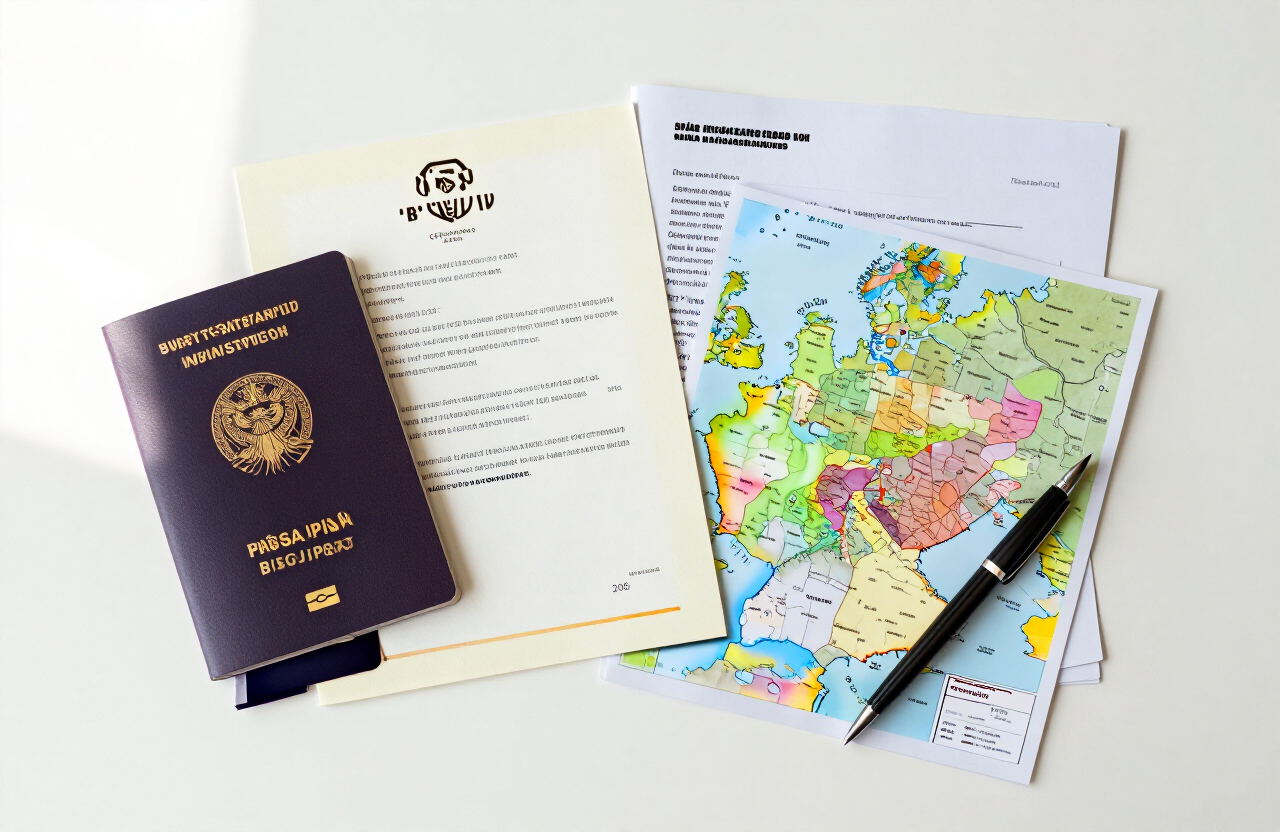
Two expats with identical qualifications, identical job offers and identical documents can face completely different German visa journeys — simply because one applies through a strict embassy and lands in Berlin, while the other applies through a more flexible mission and settles in a smaller district. Germany’s immigration system is national in law but local in practice: the Residence Act sets the framework, but the German mission abroad and the local Ausländerbehörde (Foreigners’ Office) decide how it is applied. This guide maps where the rules bend by location, what you can predict, and what you must confirm with your specific authority before you gather a single document.
- Embassy legalisation vs. apostille depends on your document’s country of origin, not on Germany’s preference — Hague Convention countries need a single apostille, while others require full diplomatic legalisation.
- Document acceptance is mission- and application-specific: each German mission publishes its own checklist, and the same document can be accepted in one country and queried in another.
- Processing speed varies sharply between large-city and smaller-district Ausländerbehörden, so your registered address can materially change how long your permit takes.
Phase 1: Home Country & German Mission Variations
Your first encounter with regional variation happens before you reach Germany, at the German embassy or consulate in your home country. Each mission translates the national requirements into a concrete document checklist, and those checklists are not identical. What every mission shares is the underlying legal framework; what differs is which proofs they accept, how they verify foreign documents, and which providers they trust for blocked accounts and insurance.
Apostille vs. Legalisation (Legalisierung)
Foreign public documents are authenticated in one of two ways depending on the issuing country, not on Germany’s choice. If your country belongs to the Hague Apostille Convention, a single apostille from the competent authority in that country is sufficient. If it does not, the document must go through full diplomatic legalisation (Vollbeglaubigung) — first certified by the issuing country’s authority, then legalised by the German mission. Some German authorities additionally request an Urkundenüberprüfung, a formal verification of the document’s authenticity carried out by a German regional court (Landgericht), which can add weeks. Always ask your mission which route applies to each specific document before you start.
Certified Translations & Sworn Translators
German authorities generally require translations by a sworn translator (vereidigte Übersetzer) sworn in Germany. Translations done abroad can be accepted, but only if the translator’s certification is itself apostilled or legalised — which adds a step. Some missions accept translations completed in your home country by a locally sworn translator whose signature is authenticated; others ask you to re-translate in Germany. The safest approach is to confirm the mission’s translation rule for each document type in advance, because a non-compliant translation is one of the most common reasons a file is returned.
Blocked Account & Insurance Acceptance
Blocked account (Sperrkonto) and travel health insurance providers are not universally pre-approved. Some missions publish a list of accepted blocked-account providers; others accept any provider that issues the standard confirmation letter. The same applies to travel insurance that must cover your entry period until you join statutory or private insurance in Germany. Acceptance depends on the mission and on your application type, so check the mission’s checklist for the exact wording — and open your blocked account only after confirming the provider is accepted for your visa category.
Phase 2: Foreigners’ Office Disparities Across German Cities
Once you are in Germany, the Ausländerbehörde that handles your case is determined by where you register your address — which is why your choice of city becomes a paperwork variable. The legal requirements are federal, but capacity, appointment availability and local interpretation differ. The two factors that most change your experience are office workload and the discretionary latitude each case worker applies.
Metropolitan Backlogs vs. Small-Town Efficiency
Large-city authorities such as Berlin, Munich and Frankfurt consistently report far higher application volumes than they can process quickly, and appointment slots for residence permits in these cities can be scarce. Smaller-district authorities typically handle lower volumes and can often process the same application in a fraction of the time. The difference is real but not fixed — it shifts with staffing, seasonal demand and policy changes, so treat any specific week or month figure as a snapshot, not a rule. What is stable is the pattern: metropolitan offices tend to be slower, and registering in a smaller district where you genuinely live can shorten your wait considerably.
Ermessensspielraum & Administrative Discretion
German law gives case workers Ermessensspielraum — bounded administrative discretion — when assessing whether a requirement is met. For proofs such as adequate housing (Wohnraumnachweis), sufficient income, or the equivalence of a foreign qualification, two officials can reach different but lawful conclusions on similar facts. This discretion operates within the law: it is not arbitrary, and decisions can be challenged, but it does mean the same file can be approved in one office and queried in another. Preparing documents that clearly exceed the minimum — a larger flat, a higher income buffer, a fully recognised degree — reduces the surface area where discretion works against you.
Regional Comparison Matrix
The matrix below summarises how four key variables tend to behave across the two phases. These are patterns, not guarantees — every cell depends on the specific document, country, mission and application type. Use it to anticipate where friction is likely, then confirm the detail with your authority.
| Feature | Hague / apostille countries | Non-Hague / full legalisation | Major cities | Smaller districts |
|---|---|---|---|---|
| Document verification | Single apostille usually sufficient. | Full diplomatic legalisation, sometimes plus Urkundenüberprüfung. | Same federal rules; high volume means slower re-checks. | Same federal rules; lower volume often means faster checks. |
| Processing time | Shorter — fewer authentication steps. | Longer — multi-step legalisation can add weeks. | Often weeks to many months due to backlog. | Often faster, frequently a matter of weeks. |
| Appointment availability | Set by the mission abroad; varies by country. | Set by the mission abroad; varies by country. | Scarce in high-demand cities; book the moment you can. | Usually more available; shorter lead times. |
| Digital form submission | Many missions accept online pre-registration. | Some missions require in-person submission of originals. | Some city portals accept online intake; others do not. | Often in-person, but quicker to get an appointment. |
Pro-Tips & Warning Callouts
Avoid the verification trap. Document legalisation and apostille steps are sequential and each can stall on the previous one, so it is wise to begin authenticating your foreign documents well before your visa appointment — six months ahead is a sensible planning buffer for complex files, not a legal deadline. Start with the documents that take longest (degree certificates, marriage and birth records, police clearances), and confirm the exact authentication route with your mission before you pay for any certification.
Securing a Fiktionsbescheinigung. If your current permit is about to expire while your extension or change-of-status application is still pending, you can request a Fiktionsbescheinigung — a provisional document under § 81 of the Residence Act that evidences your continued right to reside and, where applicable, to work while the decision is outstanding. It is issued when your application has been submitted in time and deemed complete; it is not a permit you can demand at will, and the authority decides whether the work authorisation carries over. Ask for it the moment you book a delayed appointment, not after your current card lapses.
Frequently Asked Questions
Planning your move to Germany?
Bookmark this guide and check your official local German mission checklist before gathering your documents — then follow up with the address registration and banking steps that unlock life once you arrive.
Read more Germany relocation guidesReviewed by the Expat Germany Guide editorial team
This guide is informational and based on the German Residence Act (Aufenthaltsgesetz), the Hague Apostille Convention, and publicly published German mission and Ausländerbehörde guidance. Document authentication, blocked-account acceptance and processing times depend on the specific document, country, mission and application type, and the responsible authority makes the final decision — always confirm the current requirements for your individual case with your German mission and local Ausländerbehörde before applying. It is not formal legal advice.